
Areas We Commonly Address:
Whether you are dealing with communication breakdowns, the pressures of parenting, or the intricacies of joint-family living, we help you identify unhelpful patterns and build a more harmonious home. The goal is to safely explore these relationships, strengthen your emotional connections, and develop the tools needed to weather any storm together.
- Family Conflict & Relationship Difficulties
- Communication Challenges
- Parenting & Co-Parenting Concerns
- Caregiver Stress & Responsibilities
- Adolescent & Behavioral Issues
- Separation, Divorce & Blended Families
- Grief, Loss & Shared Stress
- Family Resilience & Strengthening
What is Family therapy?
Understanding the therapy
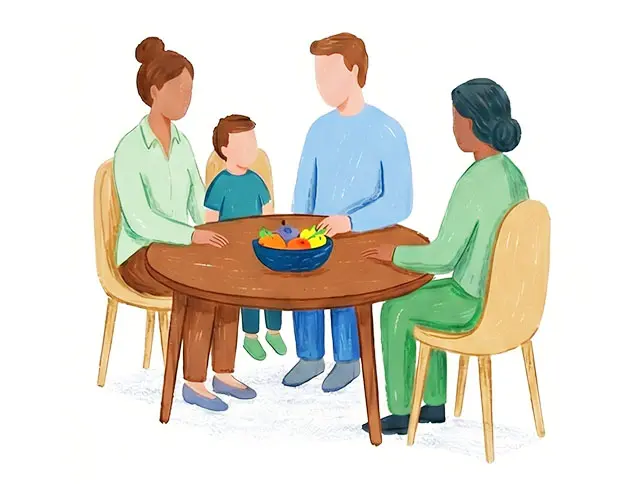
Family therapy is a collaborative process where family members work with a qualified mental health professional to address challenges such as communication difficulties, family conflict, parenting concerns, behavioral issues, and mental health concerns affecting family relationships.
In a safe and confidential environment, families explore relationship patterns, improve communication, strengthen emotional connections, and develop effective problem-solving and coping skills.
What to Expect from Your Sessions
Whether you are dealing with communication breakdowns, the pressures of parenting, or the intricacies of joint-family living, we help you identify unhelpful patterns and build a more harmonious home.
Improved Communication
You will discover how to express your personal needs openly and listen to one another without immediate judgment.
Stronger Emotional Connections
We will help rebuild fractured trust, ensuring your family feels like a deeply supportive, united front.
Effective Problem-Solving Skills
Your family will learn practical, everyday tools to handle future disagreements constructively and calmly.
Healthier Dynamics
We focus on identifying toxic cycles and replacing them with positive habits that foster long-term harmony.
Our Clinical Approach
We combine deep human empathy with globally recognized, evidence-based psychological practices.
Depending on what resonates best with your specific needs, our therapists utilize Cognitive Behavioral Therapy (CBT), Acceptance and Commitment Therapy (ACT), Dialectical Behavior Therapy (DBT), mindfulness-based interventions, and trauma-informed care.
Seeking support is not a weakness; it is a profound act of courage and self-care. Take that brave first step toward a healthier, happier mind today.
Some symptoms to watch out for
Early signs that shouldn’t be ignored
- Catastrophic thinking
- Overestimating the potential for severe consequences
- Excessive Worrying
- Obsessive Thoughts & Behaviors
- Social Phobia or Other Phobias
- Procrastination & Behavioral Avoidance
- Physical Distress or Fear
- Panic Attacks
Hear from our clients
Stories of transformation
Josh – manager
Milla – artist
Sophia – teacher
Ethan – software engineer
Julia – artist
Ben – entroprenour
Frequently
Asked Questions
Questions we often asked
Q1: Who can benefit from individual therapy?
Individual therapy can help children, adolescents, and adults experiencing anxiety, depression, stress, trauma, relationship difficulties, or life transitions.
Q2: How long does therapy usually last?
The length of therapy varies based on your goals and needs. Some clients benefit from short-term therapy, while others choose ongoing support.
Q3: What happens in a typical session?
Sessions focus on understanding your concerns, developing coping strategies, and working toward meaningful, personal goals at your own pace.
Q4: Is everything I share confidential?
Therapy is confidential, with limited legal exceptions related to safety, which your clinician will explain during your first session.
Q5: How often will I attend sessions?
Most clients begin with weekly sessions, though frequency can be adjusted based on progress and individual needs.